When to Replace Tires: The Penny Test and Other Signs
When to replace your tires: NHTSA's 2/32-inch tread rule, how to do the penny test, how to read the DOT date code for tire age, and damage that means replace now.
“My heart drops every time a warning light comes on.”
- Best for
- Drivers before winter or a road trip · Owners of older or low-mileage cars · Anyone shopping for tires
- When to use
- Monthly with your pressure check, and before you buy new tires.

Theology · Scripture Cards
Open a scripture card
Already read and shared by 315 people.
 Enter His Gates with Thanksgiving
Psalm 100:4-5
Enter into his gates with thanksgiving, and into his courts with praise. Give thanks to him, and bless his name. For Yahweh is good. His…
Read this card
 He Is Not Here, He Has Risen
Matthew 28:5-6
The angel answered the women, “Don’t be afraid, for I know that you seek Jesus, who has been crucified. He is not here, for he has risen…
Read this card
 The Lord Will Fight for You
Exodus 14:13-14
Moses said to the people, “Don’t be afraid. Stand still, and see the salvation of Yahweh, which he will work for you today; for you will…
Read this card
 Be Strong and Courageous
Joshua 1:9
Haven’t I commanded you? Be strong and courageous. Don’t be afraid. Don’t be dismayed, for Yahweh your God is with you wherever you go.”
Read this card
 Listen to Him
Matthew 17:5
While he was still speaking, behold, a bright cloud overshadowed them. Behold, a voice came out of the cloud, saying, “This is my beloved…
Read this card
 Until He Finds It
Luke 15:4, 6
“Which of you men, if you had one hundred sheep and lost one of them, wouldn’t leave the ninety-nine in the wilderness and go after the one…
Read this card
 The Rainbow Covenant
Genesis 9:13, 16
I set my rainbow in the cloud, and it will be a sign of a covenant between me and the earth. … The rainbow will be in the cloud. I will…
Read this card
 Take Heart, It Is I
Matthew 14:27, 31
But immediately Jesus spoke to them, saying, “Cheer up! It is I! Don’t be afraid.” … Immediately Jesus stretched out his hand, took hold of…
Read this card
Key Takeaways
- Replace tires at 2/32 inch of tread; the penny test shows it in seconds.
- Read the last four digits of the DOT code to see the tire's week and year of manufacture.
- Some manufacturers recommend replacing tires six to 10 years old regardless of tread, per NHTSA.
- Cuts, bulges and cracks in the sidewall mean stop using the tire.
How do you know your tires are actually done, and not just a shop's opinion? You can check most of it yourself in the driveway with a penny and two minutes.
This guide covers tread depth, tire age, the warning signs that mean replace now, and how to buy new tires without getting upsold.
The tread rule: 2/32 of an inch
The National Highway Traffic Safety Administration (NHTSA) says tires are not safe and should be replaced when the tread is worn down to 2/32 of an inch.
Tread is what grips the road in rain and snow. NHTSA recommends checking tread at least once a month, at the same time you check tire pressure.
The penny test, step by step
- Take a U.S. penny and hold it with Lincoln's head upside down, facing you.
- Place it into a tread groove.
- If you can see the top of Lincoln's head, NHTSA says it is time to replace the tire.
- Repeat in several grooves and on every tire. Wear is not always even.
Tires also have built-in treadwear indicators, raised bars between the tread. NHTSA says when the tread is level with those bars, the tire needs replacing.
How old is too old?
Rubber ages even when tread looks fine. NHTSA notes that some vehicle and tire manufacturers recommend replacing tires that are six to 10 years old, regardless of tread wear.
To find a tire's age, look for the DOT Tire Identification Number on the sidewall. The last four digits show the week and year it was made. NHTSA's example: 0308 means the third week of 2008.
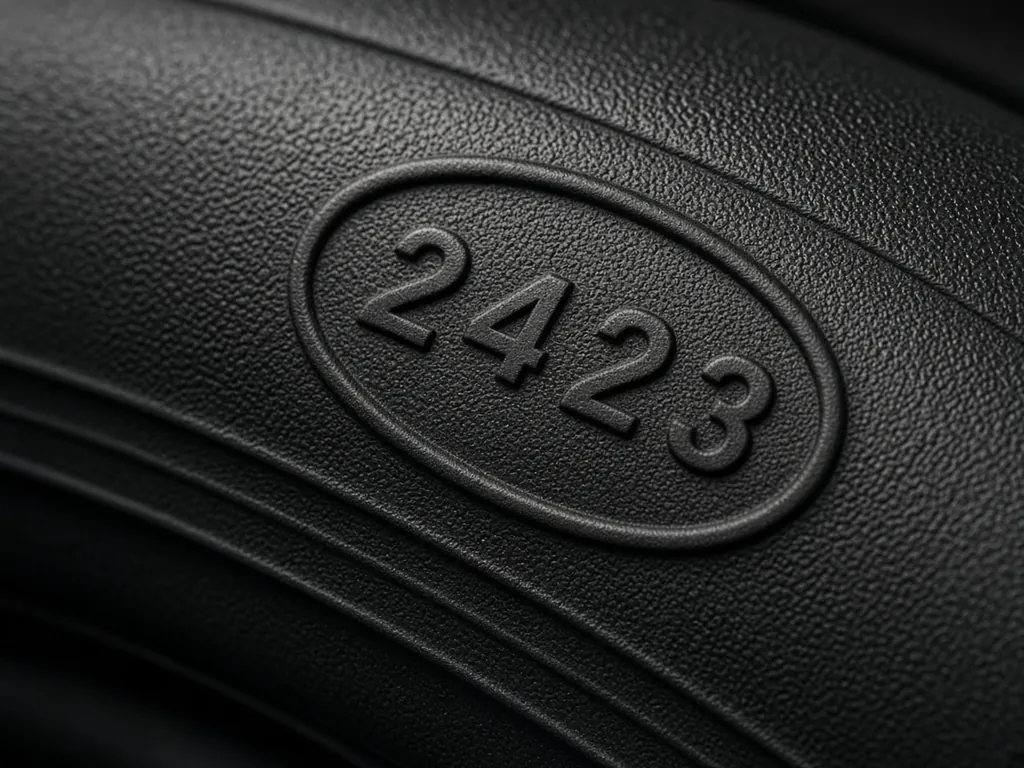
NHTSA says aging is a bigger concern for vehicles you drive rarely, cars parked in strong sun, and hot climates. Your spare ages too, so check its date code.
Replace now: damage you should not drive on
- Cuts, cracks or bulges in the sidewall.
- Irregular wear from running underinflated or overloaded.
- A tire that keeps losing pressure, or new noise and vibration.
NHTSA lists all of these as reasons to stop using a tire and see a tire professional. It also says not to use a spare as a long-term replacement for worn tires.
One more check before you buy: search your current tires for recalls on NHTSA's site. Tires get recalled too, and a recall replacement costs you nothing.
Write down your tire size from the sidewall or the door-jamb placard so you can compare quotes on the exact same tire.
Make tires last longer
- Check pressure monthly when the tires are cold. NHTSA defines cold as not driven for at least three hours.
- Use the pressure on the driver's door placard or manual, not the maximum printed on the tire.
- Rotate as your manual says. If your manufacturer recommends it, NHTSA's guidance is every 5,000 to 8,000 miles.
- Have new tires balanced when they are installed.
NHTSA estimates that properly inflated tires can extend the average life of a tire by 4,700 miles.
Buying new tires without the upsell
Compare quotes on an "out-the-door" basis: tires, mounting, balancing, valve stems or TPMS service, disposal fees and tax. Ask if an alignment is truly needed by showing you the wear pattern or the alignment readings.
NHTSA's Uniform Tire Quality Grading on the sidewall helps compare tires: a higher treadwear number should last longer, and traction grades run AA, A, B and C.
Sources: NHTSA, Tires: TireWise (2/32 inch tread rule, penny test, treadwear indicators, tire aging and TIN date code, pressure, rotation, 4,700-mile estimate, UTQG). Last reviewed November 15, 2026.
Found this helpful? Share it with a friend who’s dealing with the same mess.
Pick an app — it just sends the link, nothing else.
Frequently Asked Questions
What tread depth means I need new tires?
NHTSA says tires are not safe and should be replaced when the tread is worn down to 2/32 of an inch.
How does the penny test work?
Place a penny in the tread with Lincoln's head upside down and facing you. If you can see the top of his head, NHTSA says it's time to replace the tire.
How do I tell how old my tires are?
Find the DOT Tire Identification Number on the sidewall. The last four digits show the week and year the tire was made; 0308 means the third week of 2008. It may be on only one side.
How old is too old for a tire?
NHTSA notes that some vehicle and tire manufacturers recommend replacing tires that are six to 10 years old regardless of tread wear. Check your vehicle and tire maker's guidance.
How often should I check tire pressure?
NHTSA recommends checking at least once a month, when the tires are cold, using the pressure on your door placard or owner's manual.