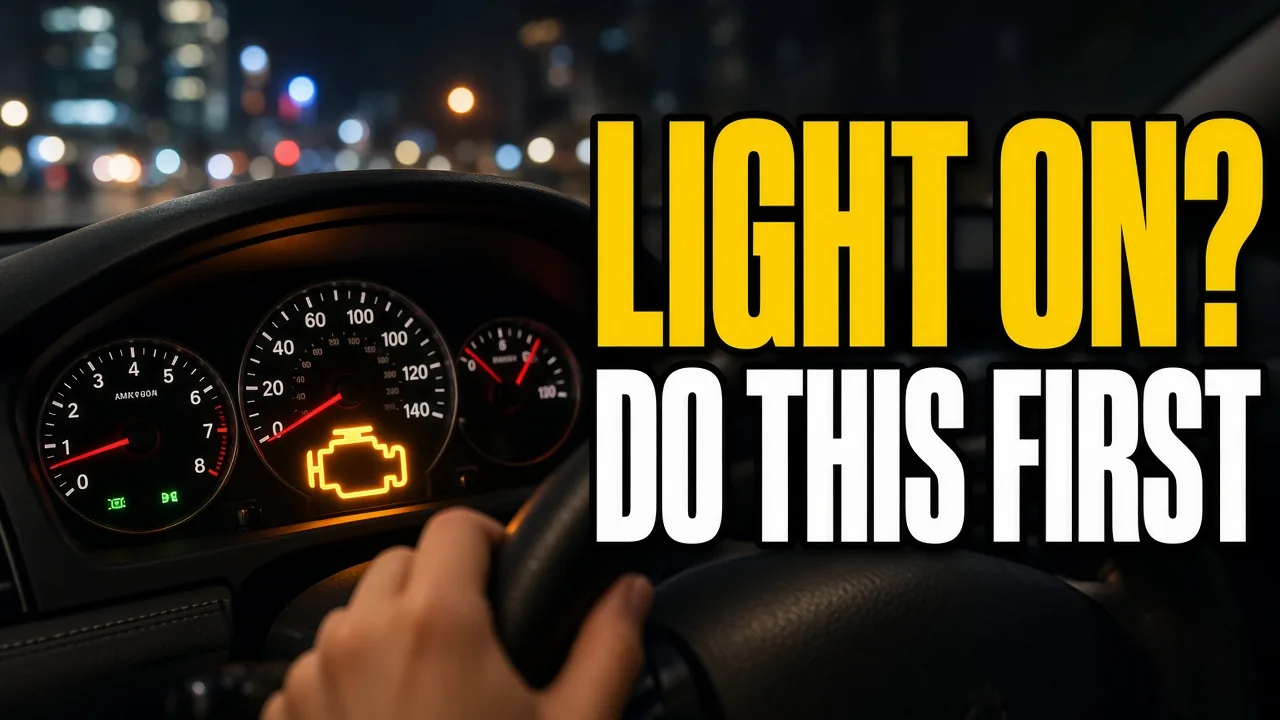
Check Engine Light On? Here's What to Do First
What to do when your check engine light comes on: the EPA's guidance on steady vs. flashing lights, the gas cap check, how OBD-II codes work and what to ask the shop.
“My heart drops every time a warning light comes on.”
- Best for
- Drivers with a warning light on · Commuters · New car owners
- When to use
- The moment the light comes on, and before you agree to any repair.
Theology · Scripture Cards
Open a scripture card
Already read and shared by 315 people.
 Not My Will, but Yours
Luke 22:42
saying, “Father, if you are willing, remove this cup from me. Nevertheless, not my will, but yours, be done.”
Read this card
 In the Name of the Lord
1 Samuel 17:45, 47
Then David said to the Philistine, “You come to me with a sword, with a spear, and with a javelin; but I come to you in the name of Yahweh…
Read this card
 Daughter, Your Faith Has Healed You
Mark 5:34
He said to her, “Daughter, your faith has made you well. Go in peace, and be cured of your disease.”
Read this card
 I Will Put Breath in You
Ezekiel 37:5-6
The Lord Yahweh says to these bones: “Behold, I will cause breath to enter into you, and you will live. I will lay sinews on you, and will…
Read this card
 The Rainbow Covenant
Genesis 9:13, 16
I set my rainbow in the cloud, and it will be a sign of a covenant between me and the earth. … The rainbow will be in the cloud. I will…
Read this card
 Salvation Is of the Lord
Jonah 2:6, 9
I went down to the bottoms of the mountains. The earth barred me in forever; yet you have brought my life up from the pit, Yahweh my God. ……
Read this card
 I Am the Light of the World
John 8:12
Again, therefore, Jesus spoke to them, saying, “I am the light of the world. He who follows me will not walk in the darkness, but will have…
Read this card
 I Am the Resurrection and the Life
John 11:25-26
Jesus said to her, “I am the resurrection and the life. He who believes in me will still live, even if he dies. Whoever lives and believes…
Read this card
Key Takeaways
- A steady light means seek service soon; the EPA says there's no cause for panic.
- A flashing light signals a severe misfire that can damage the catalytic converter: drive gently and get it fixed fast.
- Check the gas cap first; a loose cap is a common trigger.
- A trouble code is a starting point. Ask what the shop tested to confirm the cause.
Did the check engine light just pop on halfway through your commute? Before your stomach drops, know this: the light tells you to get attention soon, and in many cases you have time to handle it calmly.
Here is what to do in the first ten minutes, how to tell a steady light from a flashing one, and how to get a diagnosis without paying for guesswork.
Steady light or flashing light: the difference matters
The U.S. Environmental Protection Agency explains that cars from 1996 and newer use an on-board diagnostic system, OBD-II, that turns on the light when it detects a problem.
Steady light: the EPA says there is no cause for panic. The car is asking you to seek service soon.
Flashing light: the EPA says a severe problem, such as a misfire that can damage the catalytic converter, is happening. You can still drive, but minimize time on the road and avoid high speed and heavy loads.
The EPA notes that a severe misfire over a short period can seriously damage the catalytic converter, which is typically the most expensive emission part to replace. A flashing light means book the repair now, not next month.
Your first five checks
- Look at the other gauges. High temperature, low oil pressure or a red warning light changes the plan: pull over safely and check your owner's manual.
- Notice how the car feels. Shaking, stumbling or a loss of power is worth writing down for the shop.
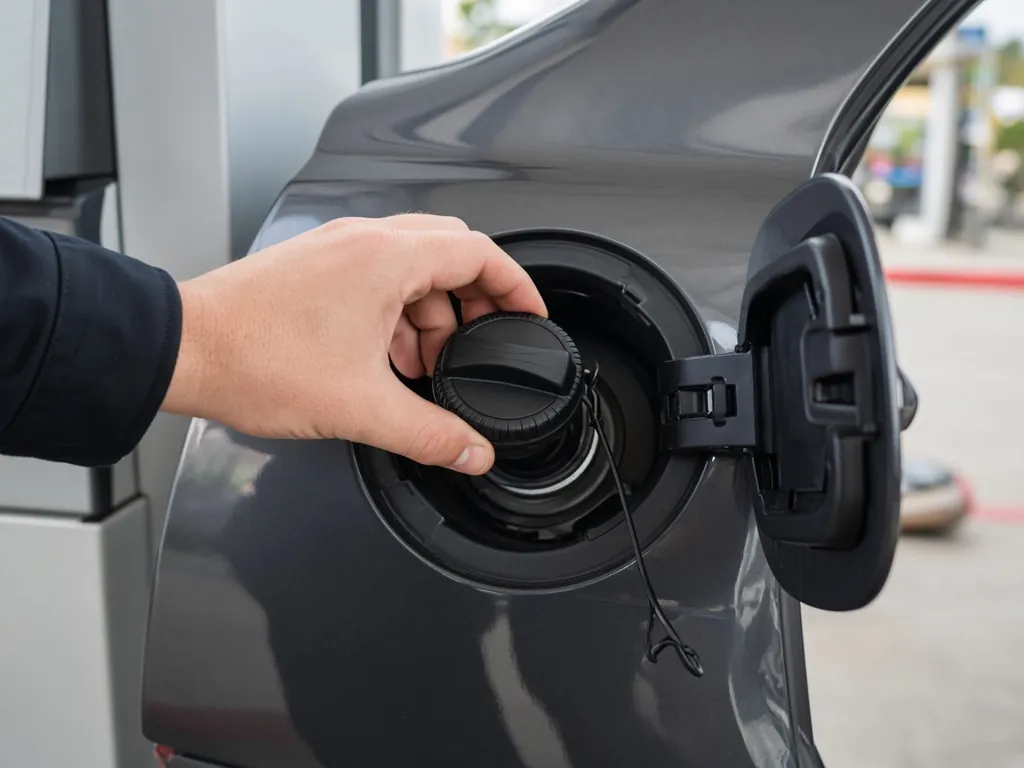
- Check the gas cap. The EPA lists a loose or missing gas cap as a common trigger. At your next stop, make sure it clicks tight.
- Drive normally for a few trips. The EPA says if the light goes out after a few short trips following a cap fix, the system is doing its job.
- If it stays on, book a diagnosis. Delaying can turn a cheap fix into an expensive one.
How the shop finds the problem
A technician connects a scan tool to the OBD-II port, usually under the dashboard, and reads the stored trouble codes. The EPA describes the code as a pointer that helps the technician follow the manufacturer's repair procedure.
A code is a starting point, not a final answer. A misfire code, for example, can come from a spark plug, an ignition coil or a fuel problem. Good diagnosis confirms the cause before parts get replaced.
Many auto parts stores offer a free code read. That can tell you what area to look at, but it is not the same as a full diagnosis.
The FTC notes that many shops charge for diagnostic time. Ask up front whether that fee applies if you have the repair done somewhere else.
Questions that keep the visit honest
- "What code did you find, and what did you test to confirm the cause?"
- "Is this repair urgent, or can it wait until my next service?"
- "Can I have the estimate in writing before you start?"
- "Will you call me before doing anything beyond the estimate?"
The FTC says a written estimate should list the condition, the parts and the expected labor, and should state that the shop will contact you before going over a set amount.
What not to do
- Do not just clear the code and forget it. If the fault is real, the light will return, and you lose time.
- Do not ignore a flashing light. That is the one the EPA flags as a catalyst-damaging problem.
- Do not refuel with the engine running. The EPA notes it can turn the light on.
The calm plan, in one line
Steady light: check the cap, watch it for a few trips, then book a diagnosis. Flashing light: slow down, keep trips short and get it to a shop as soon as you can.
Sources: U.S. EPA, Do you drive a 1996 or newer car or light truck? (OBD fact sheet); U.S. EPA, Frequently Asked Questions About On-Board Diagnostics; Federal Trade Commission, Auto Repair Basics. Last reviewed November 15, 2026.
If this saved you a headache, it might save a friend one too.
Pick an app — it just sends the link, nothing else.
Frequently Asked Questions
Can I drive with the check engine light on?
With a steady light, the EPA says you can keep driving but should seek service soon. With a flashing light, it says you can still drive safely but should minimize driving, avoid high speeds and heavy loads, and get the car repaired quickly.
Why is my check engine light flashing?
The EPA explains that a flashing light indicates a severe problem such as an engine misfire that can damage the catalytic converter, one of the most expensive emission parts to replace.
Can a loose gas cap turn on the check engine light?
Yes. The EPA lists a loose or missing gas cap as a cause. Tighten it, and if the light goes off after a few short trips, the system is working as designed.
Will the check engine light turn off by itself?
It can. The EPA says if the problem disappears within a few trips, such as after tightening the gas cap, the computer turns the light off.
Is a free code read the same as a diagnosis?
No. A code points to an area or system. A diagnosis confirms the actual cause with testing before parts are replaced. Ask whether the shop charges a diagnostic fee.